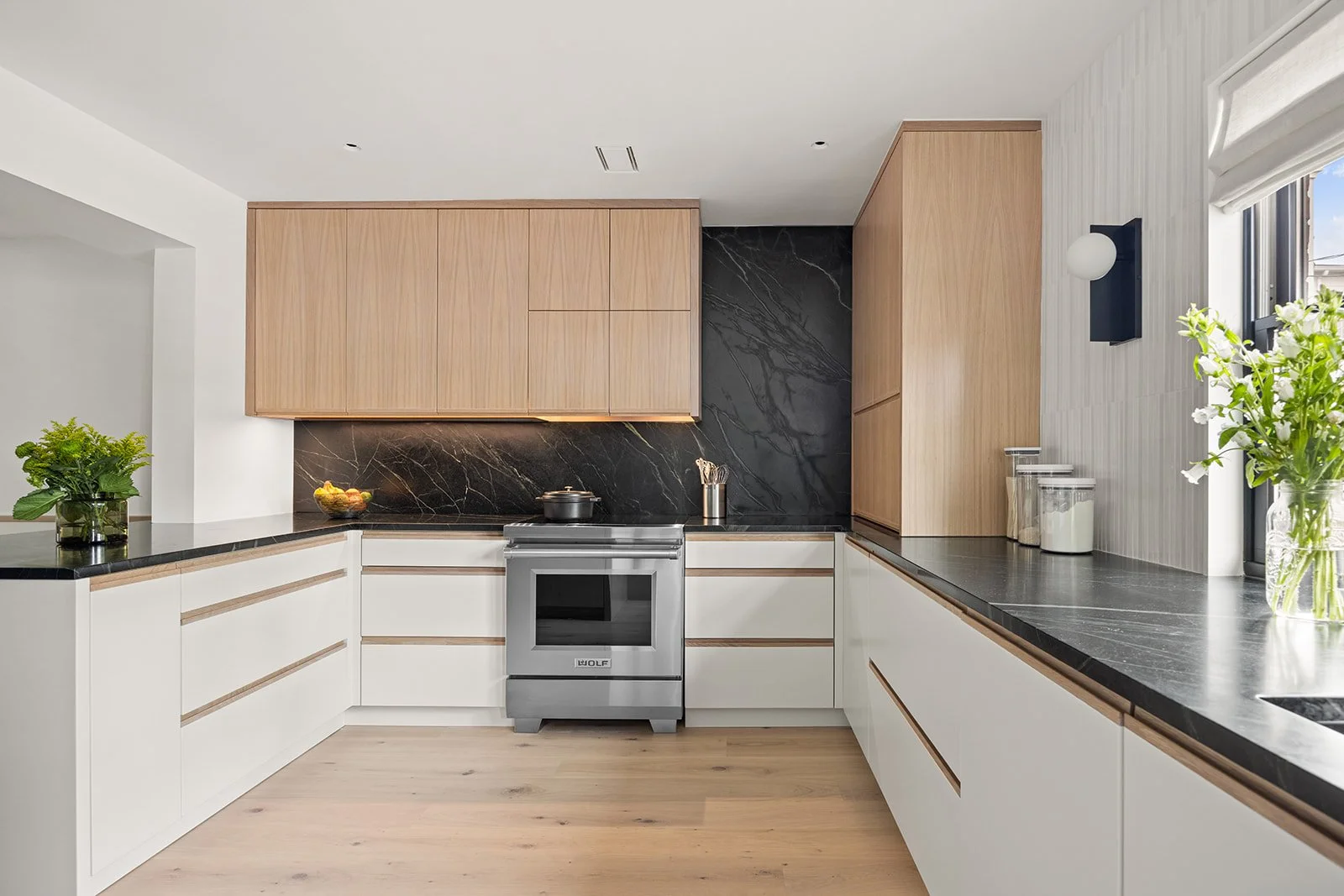
On Restraint: The Architecture of Less
A reflection on why the most enduring spaces are defined not by what is added, but by what is carefully left out.
There is a particular kind of quiet that settles into a well-designed room — a stillness that has nothing to do with silence and everything to do with intention. It is the quiet of a space that knows what it is.
We live in an era of accumulation. More materials, more finishes, more furniture, more light fixtures. The default impulse in design — as in life — is to add. To fill. To resolve every corner with something.
But the spaces that stay with us longest tend to operate on a different logic. They are defined by their absences as much as their presences. A single slab of travertine where six different tiles might have been. A window placed not for symmetry but for the way morning light crosses a particular wall in October. A room that asks nothing of you.
The Practice of Editing
The hardest part of any project is the editing phase — not the drawing, not the sourcing, but the sustained discipline of removing what doesn't need to be there. Every detail we add is a decision we are making on behalf of the people who will live or work in the space. Each one carries weight.
When we strip a renovation down to its structural bones, we are looking for the original intention of the building — what it wanted to be before decades of renovation layered over its logic. Often the best move is to restore a clarity that was always latent, just buried.
Material Honesty
We are drawn to materials that age truthfully. White oak that silvers at the edges. Plaster that shows the hand of the person who applied it. Concrete that records the form it was poured into. These surfaces don't pretend. They carry time visibly, which means they only deepen as years pass.
This is the opposite of surfaces designed to look perpetually new — laminates that resist wear by resisting everything, including warmth. A home should be capable of being lived in. It should be able to absorb a decade.
What Clients Teach Us
The clients who have shaped our practice most are the ones who came to us with a clear sense of how they wanted to feel in a space, not how they wanted it to look. That distinction — feeling over appearance — is the most useful compass in design.
A family that wanted their kitchen to feel like the center of the house, not a room adjacent to it. A couple who asked that their bedroom feel like leaving the city without leaving the city. These instructions are harder to execute than a finish schedule, but they are more honest about what architecture is actually for.
We are in the business of making places where people can be more fully themselves. Restraint, in that context, is not a style. It is a form of generosity.